
The How and the Why of creating the perfect artists' brush
There’s a particular romance to a truly great brush. You feel it the moment it touches paper or canvas: the spring, the point, the way it holds a reservoir of colour and then releases it exactly when you ask. Long before “artist grade” became a marketing phrase, the world’s elite brushmakers built their reputations the old way, through patient handwork, rigorous selection of hair or filament, and the accumulated knowledge of generations.
Brands like Escoda (Spain) and da Vinci (Germany) sit right at the heart of that tradition. What still fascinates me is how much of the craft remains intensely human. At Escoda, the company describes brushmaking as a process where the brushmaker relies on simple hand tools and, crucially, never “carves” a brush into shape with a knife. The shape is formed by hand, because the handmade shape is viewed as a core quality feature of a serious artist brush. That insistence on hand-formed geometry is one reason their best brushes feel so alive in use.
Da Vinci tells a similar story, still focused on using top raw materials and skilled hand assembly to create brushes that artists rely on across watercolour, oil, acrylic and more. Different country, same mindset: the brush is not a disposable tool, it’s an extension of the artist’s hand.

1. Shaping the fibres to the perfect shape in a brush head mould. 2. Fitting the carefully bound brush tips into the ferrule. 3. Finishing touches to perfect the layering and shape of the brush head.
Why traditional fibres earned their “legend” status
The classic natural hairs became famous because each one solves a different painting problem.
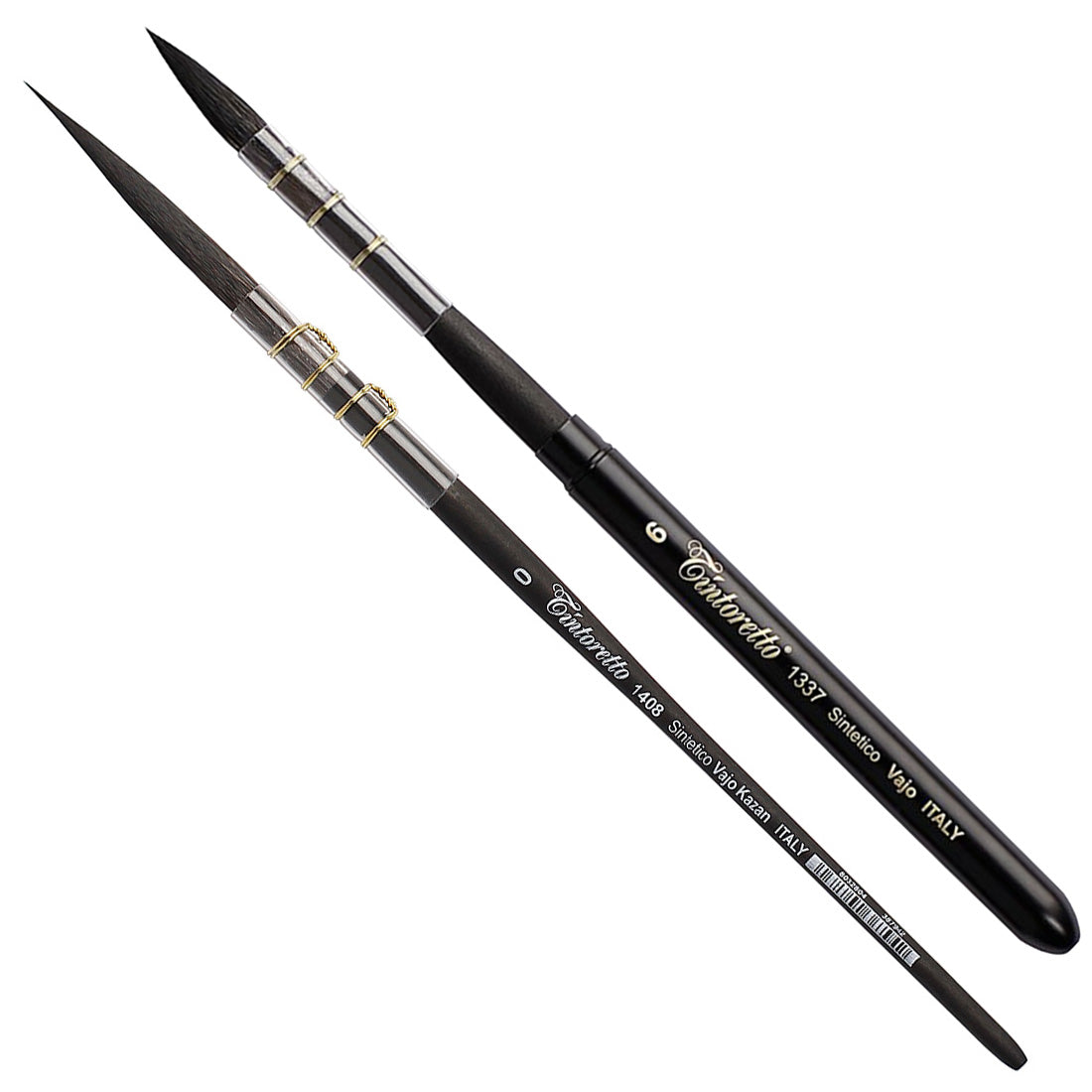
Kolinsky sable (and other high-end sables) is prized for a reason watercolourists understand instantly: it can carry a lot of water, snaps back into shape, and forms an incredibly sharp point. That combination makes it the gold standard for controlled washes, edges, and detail, especially in round brushes.
Squirrel hair sits at the other end of the feel spectrum: softer, more flowing, less spring. It excels when you want a “loaded brush” to lay down broad, even washes or soft transitions, think skies, big shadow shapes, or wet-in-wet passages that need gentle handling.
Goat hair is often found in wash brushes and hake style brushes. It’s soft, generous, and excellent for wetting paper, lifting, and laying big, flat applications.
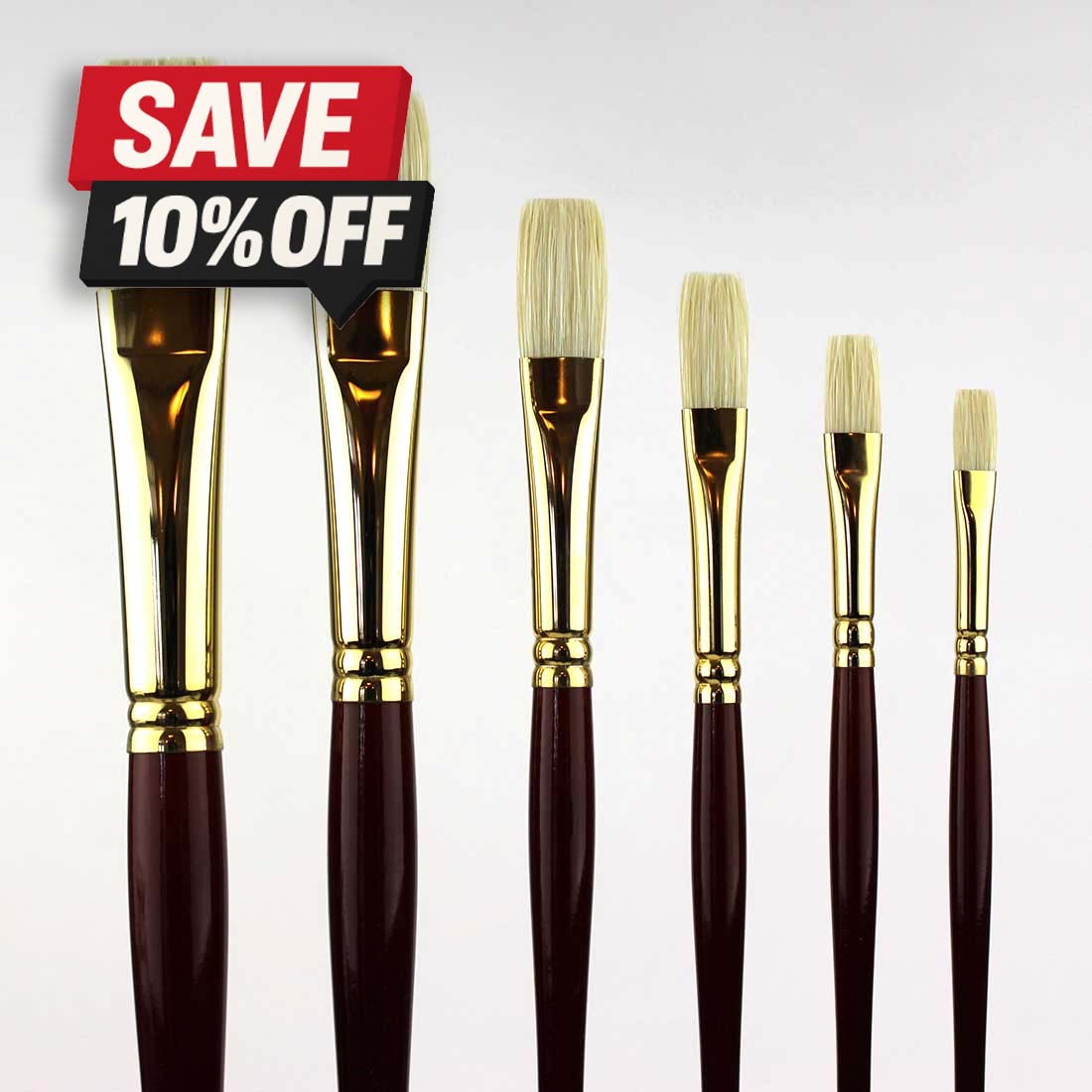
Hog bristle (the oil painter’s workhorse) brings stiffness and “tooth.” It’s built for pushing thicker paint, scrubbing, scumbling, and leaving lively brushmarks, ideal for alla prima work, impasto passages, and textural underpainting.
Then there are specialty hairs (ox, mongoose, etc.) historically used to achieve specific balances of softness, spring, and resilience.
The key takeaway is this: traditional fibres are not “better” in the abstract, they’re better at particular jobs.

1. Precise machinery and artisan handmade skills work in partnership. 2. Glueing the brush tip into the metal ferrule to secure it before adding the handle.
Designed for The modern turning point: synthetics become truly serious and Versatility
Here’s the exciting part for today’s painters: synthetics are no longer the compromise they were decades ago. The new wave of engineered filaments has become wildly sophisticated, shaped, tapered, crimped, blended by diameter and length, so they can mimic the behaviour of natural hair with surprising accuracy, while also offering consistency from brush to brush.
Escoda is a great example of how deliberate this development has become. Their Prado “Tame” synthetic is described as highly valued specifically because it performs similarly to sable, imitating spring and liquid absorption by combining multiple fibre diameters and lengths. Their Perla “White Toray” synthetic is described as one of the softest options (often used for watercolour), designed to achieve a perfect tip while retaining a large amount of paint.
In plain English: these aren’t generic nylon brushes, they’re engineered painting tools.
This matters for artists in a socially responsible, environmentally conscious world. Natural hair sourcing can raise ethical concerns and, depending on material and region, may be impacted by tightening regulations and availability. Modern synthetics offer a compelling alternative: often vegan-friendly, more uniform, and frequently more durable in the long run, especially for students, plein air painters, and anyone who wants reliable performance without the baggage. Escoda itself highlights modern fibres performing close to natural options and notes their vegan-friendly nature in some ranges.

1. Preparing the completed handle end before fitting the ferrule and brush head. 2. Fitting and crimping the ferrule and brush head to the handle. 3. Finishing the fit and finish of the completed brush.
Matching fibre to application: a practical artist’s view
If you mainly paint watercolour: Choose springy, sharp-pointed rounds (natural sable/Kolinsky or high-end sable-like synthetics) for detail, controlled edges, and layered glazing. Choose softer “wash-capacity” fibres (squirrel-like synthetics, soft Toray-style filaments, or traditional squirrel/goat) for big washes and wet-in-wet atmospheres.
If you paint oil or acrylic: Use bristle or stiffer synthetics for thick paint, texture, and assertive mark-making.
Use softer synthetics (or sable-like options) for glazing, blending, refined edges, and portrait transitions.
If you love mixed media: Synthetics can be especially smart. They tolerate different binders, repeated rinsing, and varied surfaces. They also tend to keep their shape well through hard use.
Why these heritage brushmakers still matter
In an age of mass production, the reason Escoda and da Vinci remain “elite” is not just brand mythology, it’s their continued emphasis on craftsmanship, materials knowledge, and consistency. Da Vinci’s own writing underscores the value of hand shaping as a defining feature of a good artist brush. Escoda’s materials education, explaining how their fibres are built to achieve specific behaviour, shows the same seriousness from the maker’s side. When you combine that heritage with the rapid evolution of modern synthetic fibres, artists today get something special: the romance of tradition, plus the practical advantages of a more responsible, high-performance future.
If you haven’t tried one of the newer premium synthetics yet, I genuinely recommend it, especially if you’ve ever thought, “I love the feel of sable, but I’d like a modern alternative.” Today, you can have both the point and the performance, without the compromise.
Key Steps in Handmade Artist Brush Manufacture
1. Fibre selection and grading: Natural hairs or engineered synthetic fibres are carefully selected, graded by length, thickness and elasticity, and matched to the intended brush type.
2. Fibre blending and alignment: Fibres are blended (when required) and precisely aligned by hand to achieve the correct balance of spring, point and paint holding capacity.
3. Hand shaping of the brush head: The brush head is shaped entirely by hand (not cut), forming the point or edge naturally, critical to performance and longevity.
4. Binding and ferrule setting: The shaped fibres are bound and set into a seamless metal ferrule, secured with pressure and adhesive for durability.
5. Handle fitting and balancing: Handles are fitted, aligned and balanced to ensure comfort, control and correct weight distribution.
6. Drying, finishing and quality contro: Brushes are dried, cleaned, and individually inspected to ensure point retention, shape memory and professional performance.
Escoda
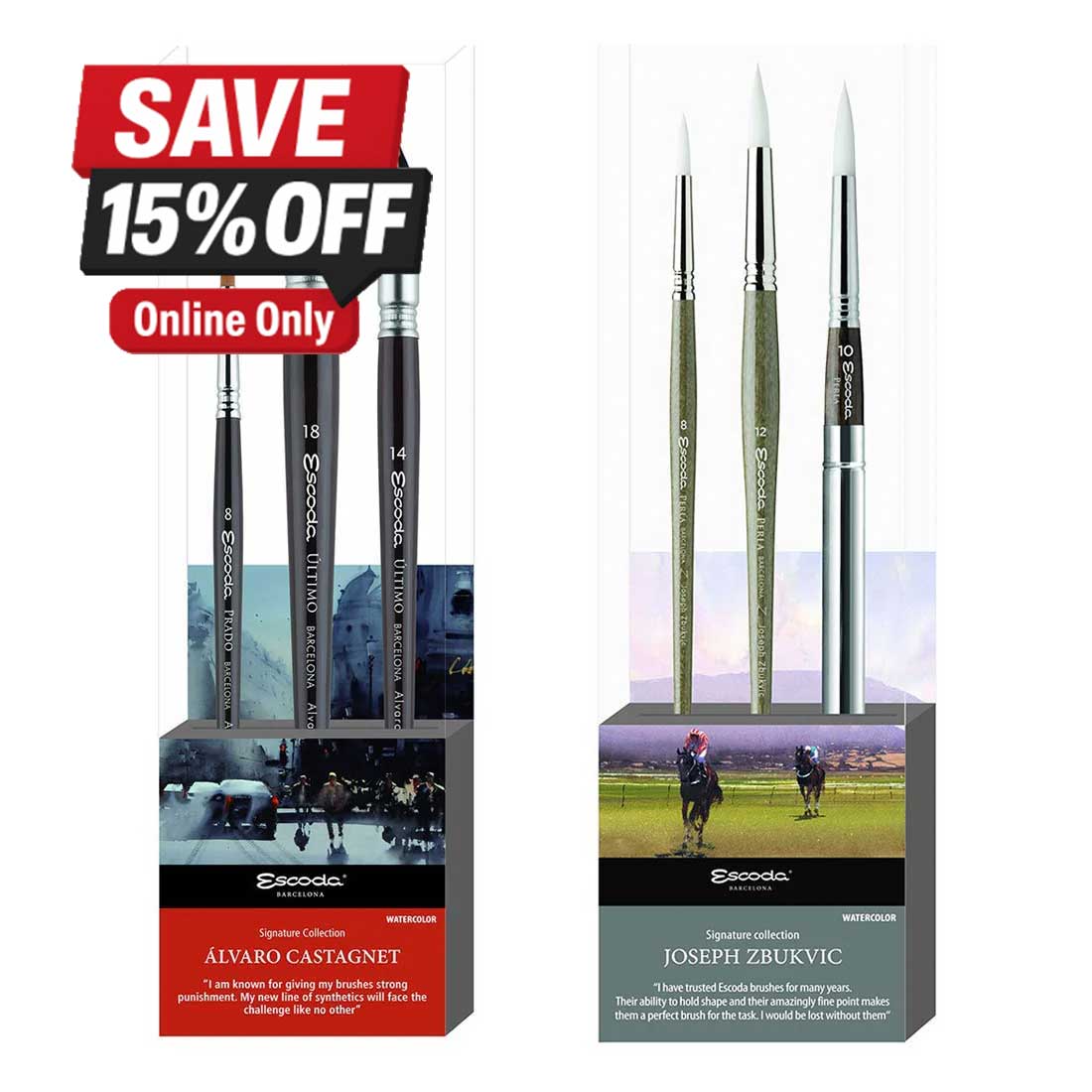
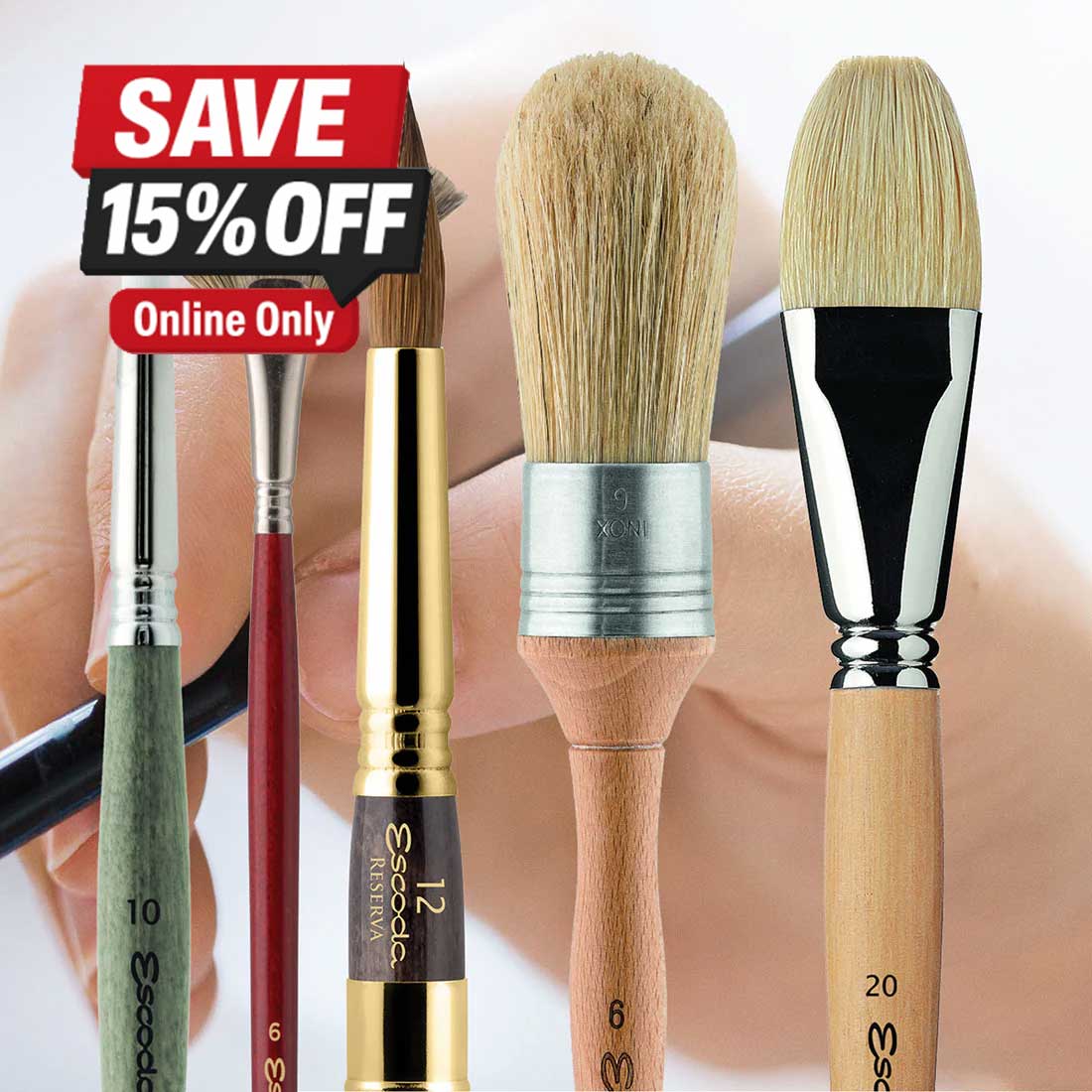
Escoda Brush Sets

Da Vinci
NEEF
Parkers
Omega
Old Holland
Tintoretto
Subscribe to our Newsletter
The latest news, events and stories delivered right to your inbox