
The Art of Paint Making: From Tradition to the Studio Artisan Slab
Long before paint arrived in neatly labelled tubes, artists were intimately involved in the creation of their own materials. From the workshops of the Renaissance to the studios of the 19th century, painters routinely ground pigments by hand, combining them with oils and resins to produce colours tailored to their needs. This practice was not merely technical, it was deeply connected to the artist’s understanding of colour, permanence and surface. At its core, paint is a simple union: pigment and binder. Pigments, finely ground mineral, earth or synthetic particles, provide colour, while the binder (commonly oil for oil painting) suspends and adheres the pigment to the surface. Historically, artists used linseed oil most commonly, valued for its strength and durability, while walnut and poppy oils were used for lighter colours due to their reduced yellowing.

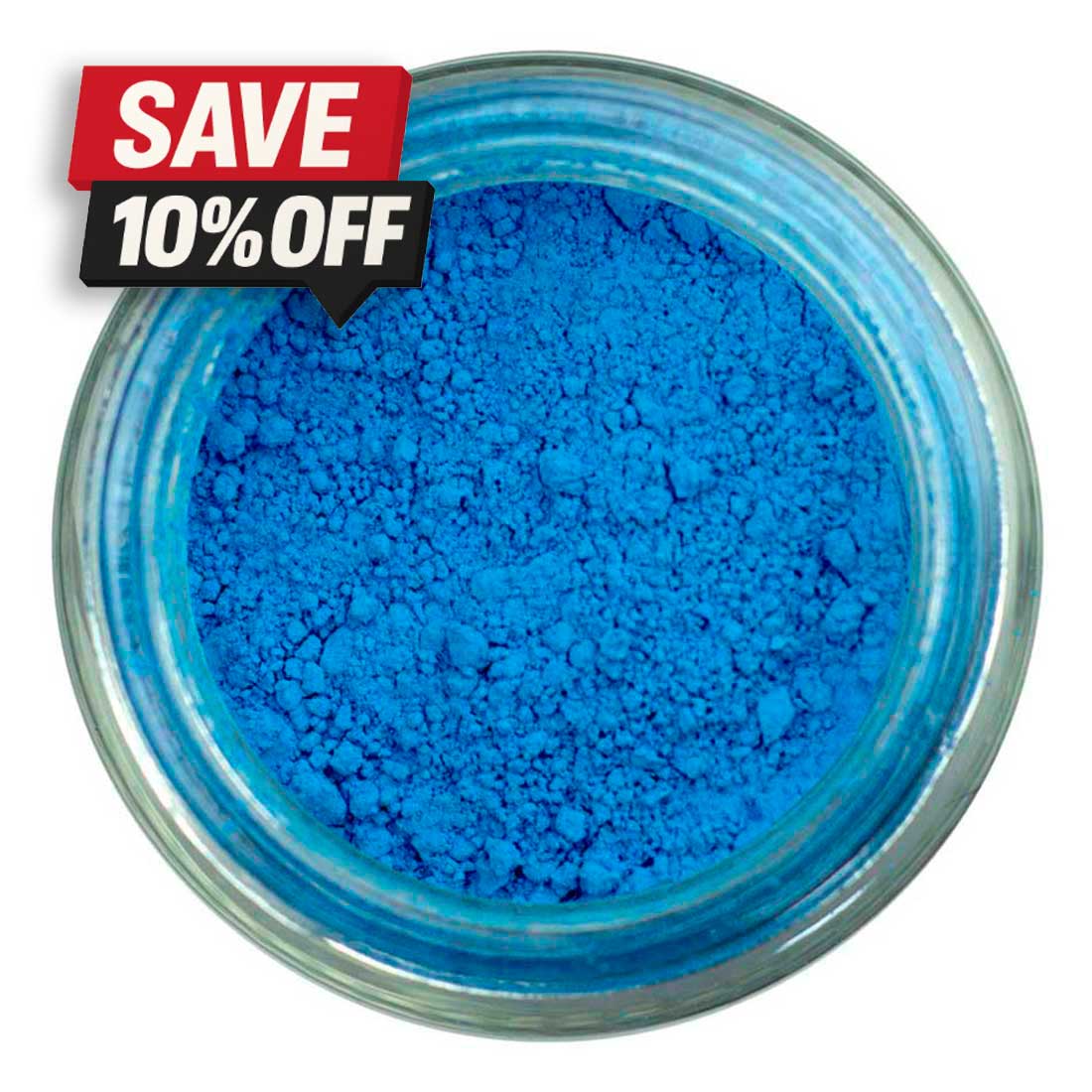
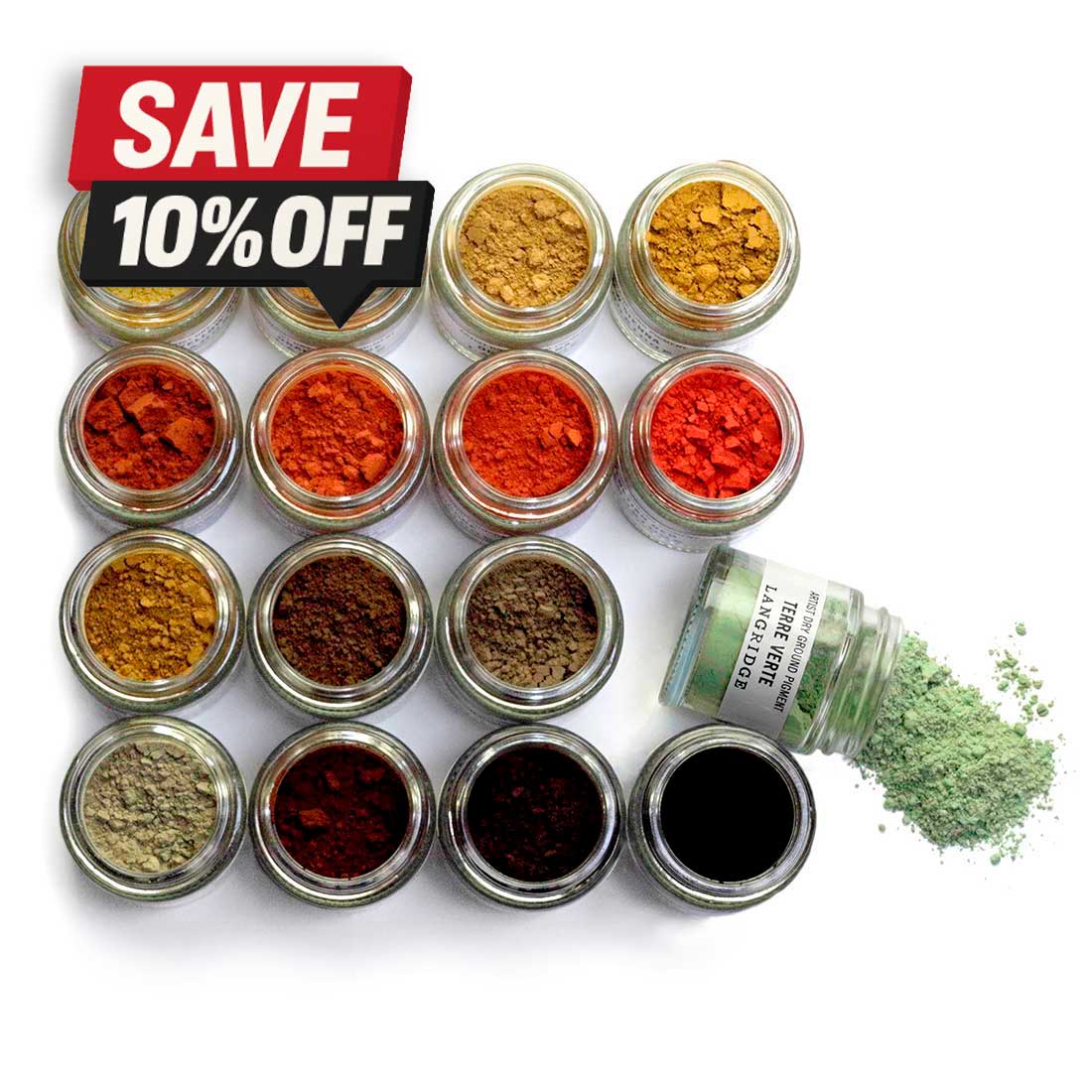
Raw Dry Ground Pigment conveniently available in 120ml jars from Langridge Colour. Only the most superior pigments are sourced from around the world.
A Brief Historical Perspective
In early European painting, apprentices in artist workshops were tasked with grinding pigments on stone slabs using hand-held mullers. Pigments such as ochres, azurite, vermilion and lead white were carefully prepared, often washed and refined before use. The quality of grinding directly affected the brilliance and handling of the paint, too coarse and the paint would appear gritty; too fine and it could lose its character. The Industrial Revolution introduced commercially prepared paints in collapsible tubes, revolutionising portability and consistency. This shift enabled movements like Impressionism, where artists could paint outdoors with ease. However, something was lost in the transition, the direct connection between artist and material.

1. Precise machinery and artisan handmade skills work in partnership. 2. Glueing the brush tip into the metal ferrule to secure it before adding the handle.
The Artisan Approach Today
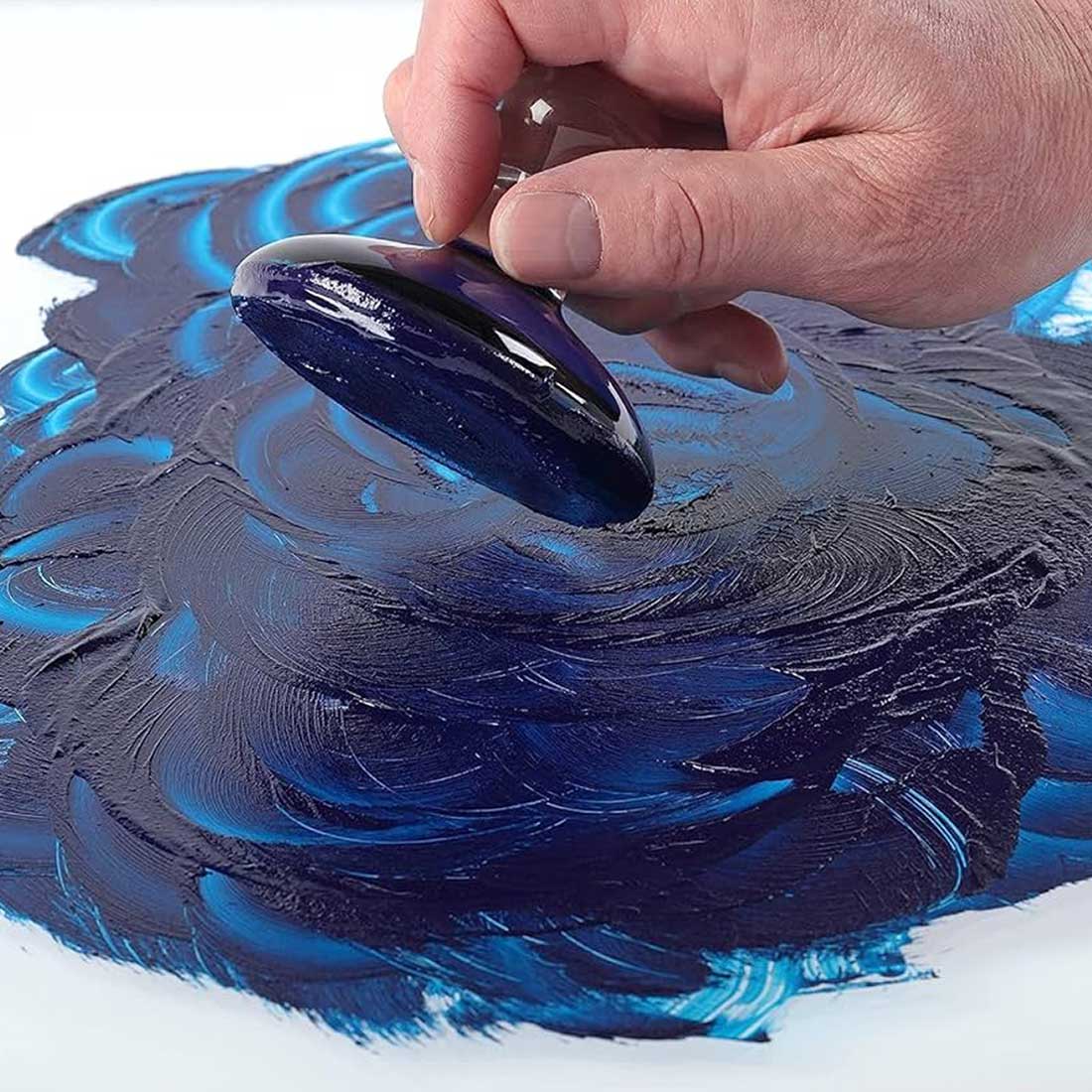
Today, there is a renewed interest in artisan paint making, particularly among painters seeking a deeper engagement with their materials. This process typically involves working with dry pigment, a chosen oil, and a small set of tools: a glass slab and glass muller. The process begins by placing a small pile of pigment onto the slab and forming a well in the centre. A measured amount of oil is added gradually, and the mixture is gently combined with a palette knife to form a paste. At this stage, the paint is still uneven and lacks refinement.The real transformation occurs during grinding. Using the muller, the artist works the paint in circular motions across the slab. This action breaks down pigment agglomerates and evenly disperses the particles throughout the oil. The goal is not simply to “mix” but to achieve optimal dispersion, where each pigment particle is fully coated and suspended within the binder.

A professional glass muller and slab are used to combine the dry pigment and binder medium in their simplest form to create colour.
The Importance of the Grinding Surface
The quality of the slab and muller surface is critical. Traditionally, slabs were made from marble or granite, but many contemporary artists prefer tempered glass slabs with a finely etched surface. This subtle tooth provides just enough resistance to effectively shear and disperse pigment particles without excessively absorbing oil or contaminating colour. Similarly, a well-made glass muller should have a slightly textured base, not polished smooth, allowing it to grip and work the paint efficiently. This interaction between muller and slab is where the true refinement of the paint occurs.
Additives and Adjustments
While pigment and oil form the foundation, artists may introduce small amounts of additives to modify handling. A drop of stand oil can increase gloss and flow, while a touch of wax medium can add body and reduce stringiness. Driers may be used sparingly, though many artisan painters prefer to work without them to maintain control over drying times.
Artisan vs Commercial Manufacture
It’s important to distinguish this process from commercial paint production. Industrial manufacturers use large-scale milling equipment such as triple-roll mills, to achieve consistent, high-volume output. These processes are highly controlled and efficient, but necessarily standardised. By contrast, artisan paint making is small-batch, intuitive and responsive. Each colour can be adjusted for texture, oil content and working properties according to the artist’s intent. It is less about uniformity and more about sensitivity to the material.
The Unique Benefits of Making Your Own Paint
Creating paint by hand offers several compelling advantages:
1. Control over consistency: from stiff, buttery paint to fluid, enamel-like mixtures.
2. Pigment integrity: using pure pigment without fillers or extenders.
3. Customisation: adjusting oil content, texture and drying behaviour.
4. Enhanced colour experience: many artists report greater depth and vitality in handmade paint.
5. Connection to process: a deeper understanding of how materials behave on the surface.
6. Perhaps most importantly: it fosters a more intentional approach to painting. When you’ve made the paint yourself, every brushstroke carries a greater awareness of the material beneath it.
A Return to Material Awareness
In an age of convenience, the act of making one’s own paint is both a practical and philosophical choice. It reconnects the artist with centuries of tradition while offering a highly personal way to shape the painting process. Whether used occasionally or as a core practice, artisan paint making invites a deeper appreciation of colour, not just as something applied, but as something created.
Discover Our Artisan Paint Making Range
Glass Mullers | Slabs | Tools
Langridge Dry Pigment
Langridge Pigment Sets
Mediums For Paint Making

Artist Raw Materials

Escoda
Escoda Brush Sets

Da Vinci
NEEF
Parkers
Omega

Old Holland
Tintoretto
Subscribe to our Newsletter
The latest news, events and stories delivered right to your inbox